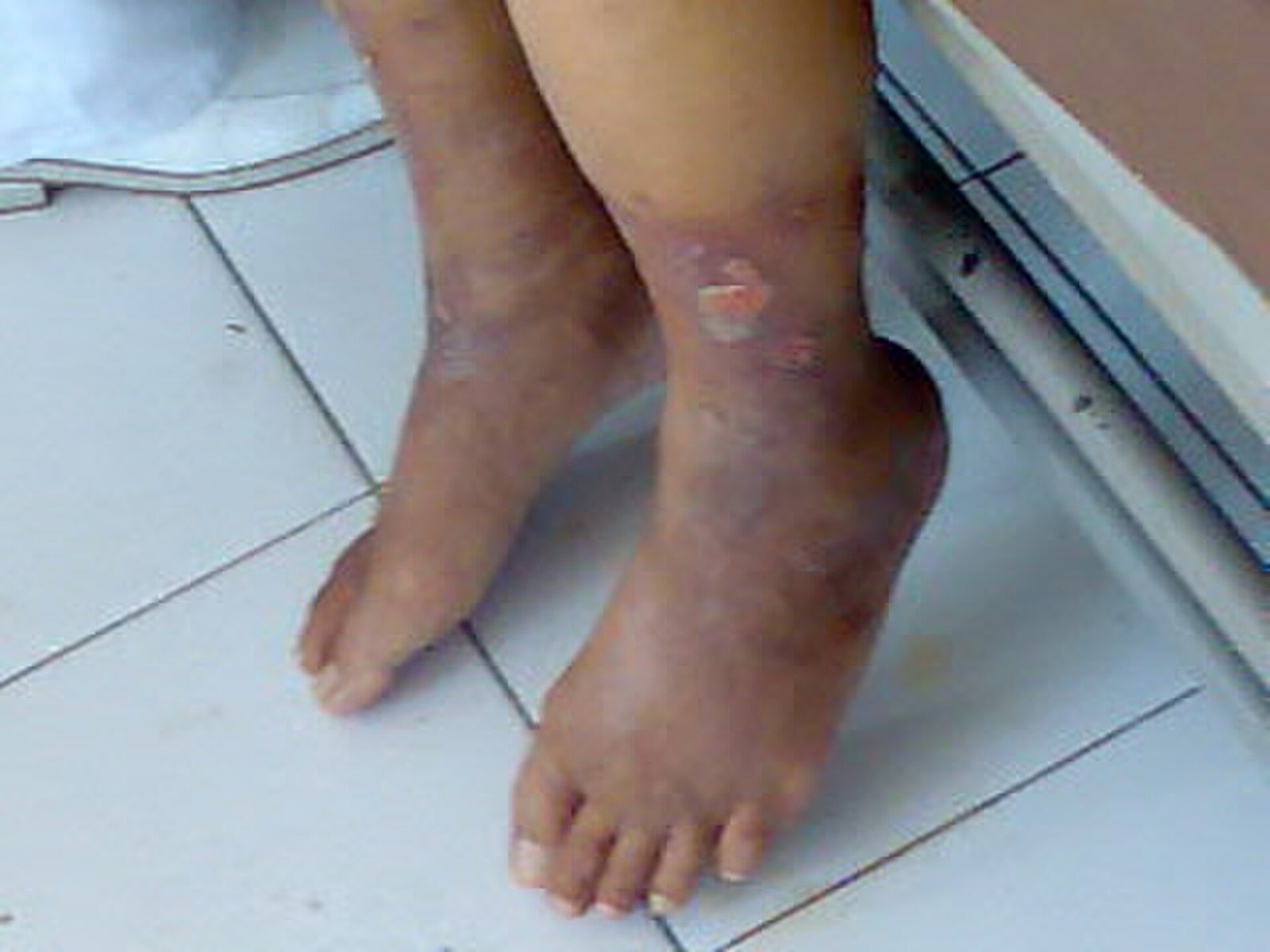
Q. The underlying pathology most commonly responsible for this presentation is?
A) Chronic venous valve incompetence causing venous hypertension.
B) Atherosclerotic occlusion of large arteries.
C) Lymphatic filariasis causing lymphatic obstruction.
D) Acute arterial embolism.
✓ The Correct Answer is:
A) Chronic venous valve incompetence causing venous hypertension.
The image shows bilateral lower limb edema with hyperpigmentation around the ankles and a shallow ulcer over the gaiter area, a classic presentation of chronic venous insufficiency (CVI) with a venous leg ulcer.
Pathophysiology-:
The underlying pathology is failure of the venous valves, which leads to venous reflux and persistent venous hypertension.
Over time, increased venous pressure causes leakage of fluid, proteins, and red blood cells into surrounding tissues.
Breakdown of these red blood cells results in hemosiderin deposition, producing the characteristic brownish skin pigmentation.
Chronic inflammation and poor tissue oxygenation eventually lead to venous ulcer formation, most commonly around the medial malleolus.
Clinical Features
Patients typically present with-:
- Leg heaviness or aching that worsens with prolonged standing.
- Pitting edema of the lower limbs.
- Brown hyperpigmentation due to hemosiderin deposition.
- Varicose veins.
- Lipodermatosclerosis in advanced disease.
- Shallow, irregular, exudative ulcers over the gaiter area, especially near the medial malleolus.
Other Options-:
Atherosclerotic occlusion of large arteries causes arterial ulcers, which are painful, punched-out ulcers occurring over the toes, heel, or lateral malleolus, often associated with diminished peripheral pulses.
Lymphatic filariasis produces chronic non-pitting lymphedema (elephantiasis) but does not typically cause the classic venous ulcer pattern.
Acute arterial embolism presents with the 6 Ps- pain, pallor, pulselessness, paresthesia, paralysis, and poikilothermia- and is an acute vascular emergency rather than a chronic ulcerative condition.
High-Yield Exam Pearls:
Most common site of a venous ulcer: Medial malleolus (gaiter area).
Most common cause: Chronic venous valve incompetence leading to venous hypertension.
Ulcer characteristics: Shallow, irregular margins, exudative, relatively less painful than arterial ulcers.
First-line conservative management: Compression therapy (after excluding significant peripheral arterial disease).
✓ One-Liner to Remember:
"Medial malleolus + brown pigmentation + edema = Venous ulcer due to chronic venous insufficiency."
✓ Take-Home Message:
Chronic venous insufficiency is the most common cause of venous leg ulcers and results from venous valve incompetence leading to chronic venous hypertension.
The combination of ankle edema, hemosiderin pigmentation, varicose veins, and a shallow ulcer over the medial malleolus is highly characteristic.