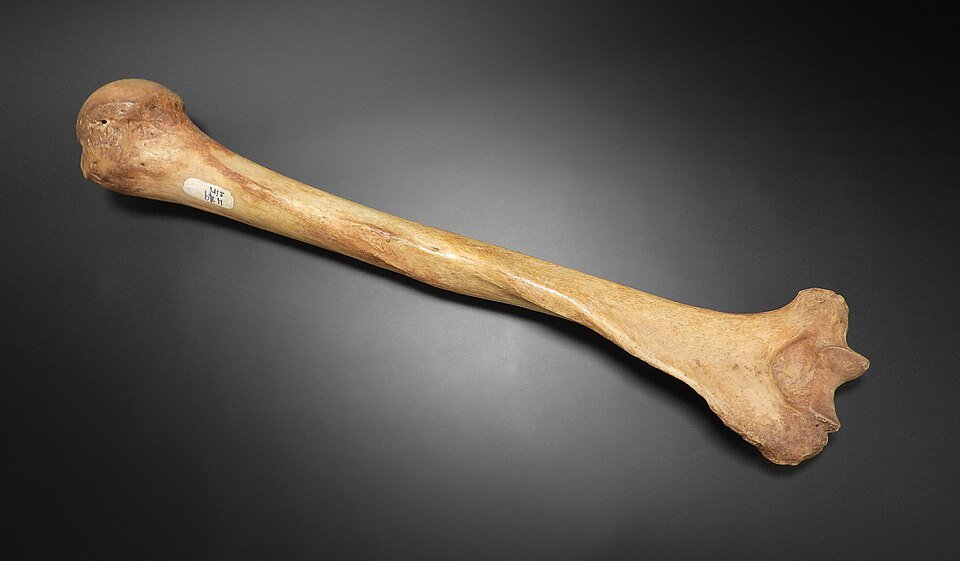
Q. Fracture of the surgical neck of this bone is most likely to injure which nerve?
A) Radial nerve.
B) Musculocutaneous nerve.
C) Axillary nerve.
D) Ulnar nerve.
✓ The Correct Answer is:
C) Axillary nerve.
The bone shown is the humerus. A fracture involving the surgical neck of the humerus most commonly damages the axillary nerve.
The axillary nerve originates from the posterior cord of the brachial plexus (C5–C6). It passes through the quadrangular space with the posterior circumflex humeral artery and wraps around the surgical neck of the humerus.
Because of this intimate anatomical relationship, fractures at the surgical neck and anterior shoulder dislocations place the nerve at significant risk of injury.
∆ Clinical Features of Axillary Nerve Injury
Injury to the axillary nerve classically presents with-:
- Weakness of shoulder abduction from 15° to 90° due to deltoid paralysis.
- Flattened shoulder contour caused by deltoid muscle wasting.
- Weakness of teres minor, resulting in impaired lateral rotation.
- Loss of sensation over the upper lateral arm (regimental badge area).
∆ Other Options-:
Radial nerve: It is commonly injured in midshaft fractures of the humerus due to its course through the radial groove.
Musculocutaneous nerve: It is rarely injured in isolated humeral fractures because it is relatively protected within the arm.
Ulnar nerve: It is most commonly affected in fractures of the medial epicondyle or injuries around the elbow.
∆ Remember these classic fracture–nerve associations-:
Fracture Site Nerve Most Commonly Injured
Surgical neck of humerus - Axillary nerve
Midshaft of humerus - Radial nerve
Supracondylar humerus - Median nerve (AIN branch)
Medial epicondyle - Ulnar nerve
✓ One-Liner to Remember:
"Surgical Neck → Axillary Nerve → Deltoid Weakness + Regimental Badge Sensory Loss."
✓ Take-Home Message:
A fracture of the surgical neck of the humerus most commonly injures the axillary nerve because it winds around this region with the posterior circumflex humeral artery.
Patients typically present with difficulty abducting the arm beyond 15°, deltoid muscle wasting, and sensory loss over the lateral shoulder.